-
Is your 'Van Gogh' real?
How to check before seeking expert authentication
Imagine stumbling upon an old painting at an auction, flea market, or even in your attic. The signature says Vincent. Could it be a lost Van Gogh masterpiece?Before you get too excited, it’s important to check a few things first. Many Van Gogh “discoveries” turn out to be reproductions, well-made copies, or even outright forgeries.
Here’s a step-by-step guide to help you determine whether your painting could be a real Van Gogh—or if it’s just a great conversation piece.
1. Is it a painting or a print?
The first and easiest test: Is your artwork an actual oil painting, or just a print?✔ Look closely at the surface:
- A real Van Gogh has thick, textured brushstrokes (impasto).
- A smooth, flat surface likely means it’s a print.
✔ Use a magnifying glass:
- Prints often have tiny dots or patterns from the printing process.
- Real paintings have visible brushstrokes and layers of paint.
✔ Feel the surface gently:
- A real Van Gogh has raised paint texture.
- A print will feel flat and uniform.
✔ Check the framing:
- Prints, lithographs, and drawings are often framed under glass or with a mat (passe-partout).
- Oil paintings on canvas are rarely framed under glass—oil paint needs to breathe.
🛑 If it’s a print, it’s not an original Van Gogh!
2. Does it match a known Van Gogh painting?
Van Gogh’s entire collection is well-documented. Most of his paintings are in museums or major collections.✔ Search online:
- Compare your painting with those in the Van Gogh Museum, Kröller-Müller Museum, or via Google image search.
✔ Compare the details:
- If your painting perfectly matches a museum version down to every brushstroke, color, and crack, it cannot be an original.
- Why? No artist, no matter how skilled, can create an exact copy by hand.
- If it looks identical, it’s most likely a printed reproduction (such as a poster or high-quality giclée print).
✔ Look for slight variations:
If your painting is similar but not identical, it could be:
- A copy made by another artist (historical or modern).
- A study or variation (though rare).
- A forgery trying to pass as an original Van Gogh.
🛑 If an exact version is already hanging in a museum, yours is most likely a reproduction. However, if your painting has noticeable differences, further research is needed.
3. Does it show Van Gogh’s unique painting technique?
Van Gogh had a distinct painting style. Even a well-made copy may lack these key details:✔ Wet-on-wet technique
- Van Gogh mixed colors directly on the canvas, not on the palette.
- If the colors seem pre-mixed and carefully applied, it’s less likely to be authentic.
✔ Visible brushstrokes with deep grooves
- He used cheap Lyon brushes with stiff pig hair, leaving distinct ridges in the paint.
- If the brushstrokes are too smooth, lack depth, or appear blended, it’s likely not painted in Van Gogh’s style.
✔ Round-tip brushes – no square-ended strokes
- Van Gogh’s brushes had a rounded tip, meaning his strokes ended softly rather than in a sharp, square edge.
- If you notice perfectly straight-edged strokes, it may not match his technique.
✔ Thick impasto—but often flattened
- Van Gogh applied thick layers of paint (impasto) to create texture and movement.
- However, since he often stacked wet paintings on top of each other and sent them by train from Arles to his brother in Paris, the impasto was frequently crushed or flattened during transport.
- If a painting has thick impasto but no sign of flattening, it could be a reproduction rather than an original work.
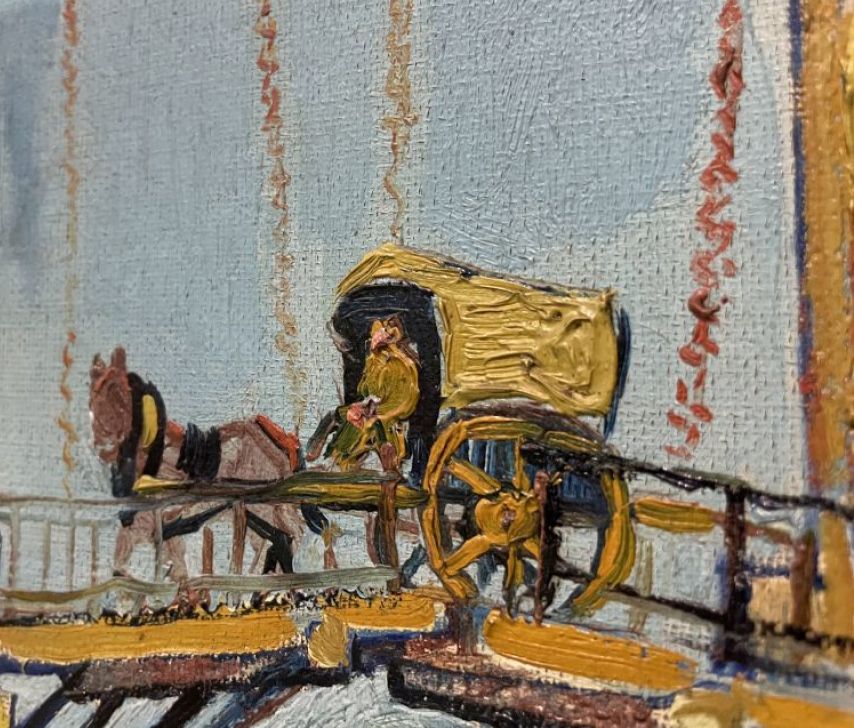
✔ Some blank areas on the canvas
- Despite using heavy impasto, Van Gogh often left small areas of blank canvas exposed, especially around the edges.
- If the entire canvas is fully covered, it may be a copy.
🛑 If the painting lacks these techniques—if the paint is too flat, the colors are overly blended, the brushwork is soft, or the impasto looks unnaturally perfect—it’s unlikely to be an original Van Gogh.
4. Did Van Gogh write about this painting? Could it be a missing work?
Van Gogh wrote hundreds of letters, mostly to his brother Theo, describing his paintings in detail.✔ Check Van Gogh’s letters:
- His complete letters are available online (Van Gogh Museum & Van Gogh Letters Project).
- Search for descriptions of your painting’s subject, colors, and location.
✔ Could it be a missing Van Gogh?
- Some Van Gogh paintings are known to have existed but are missing today.
- If your painting matches a lost work’s description, it could warrant further investigation.
🛑 If there’s no record of your painting in his letters or exhibition history, it’s much harder to prove authenticity.
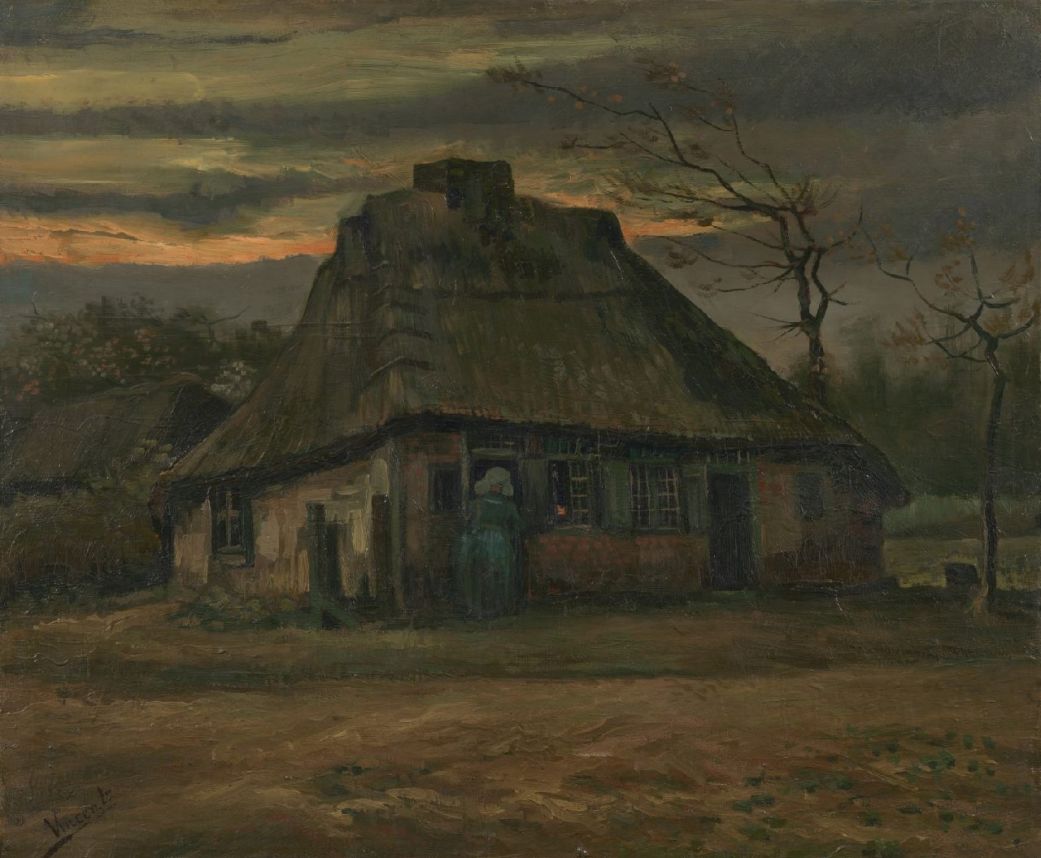
5. Do the colors match the subject?
Van Gogh’s use of color changed over time, reflecting his artistic influences and locations.✔ Dutch Period (1881-1885) – Dark, earthy tones
- Subjects: Peasants, cottages, weavers (The Potato Eaters).
- Colors: Dark browns, deep greens, blacks, muted ochres.
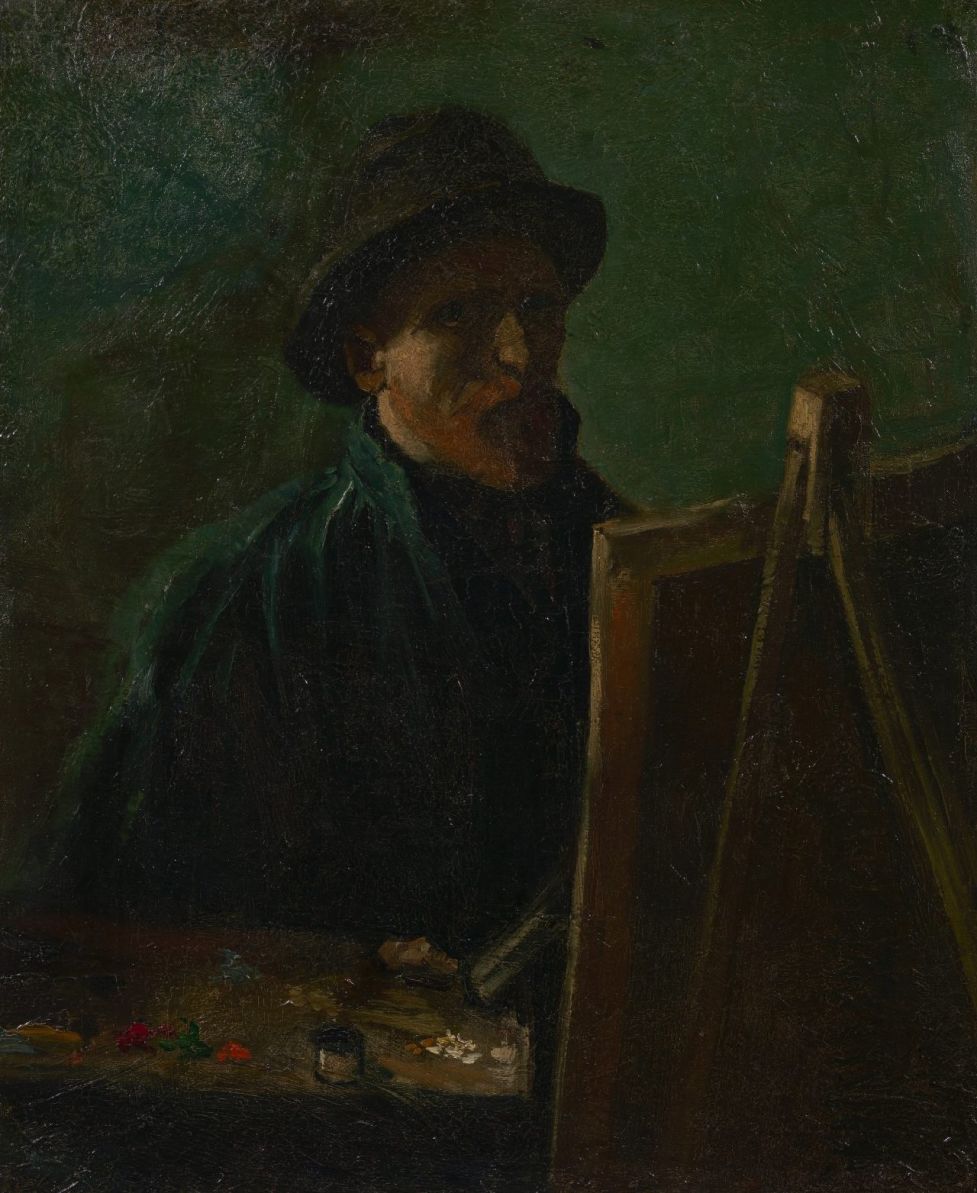
✔ Paris Period (1886-1888) – Brighter, Impressionist influence
- Subjects: Cityscapes, flowers, self-portraits.
- Colors: Light pastels, yellows, blues, pinks.
✔ Provence / Arles & Saint-Rémy (1888-1890) – Bold, expressive colors
- Subjects: Sunflowers, wheat fields, starry nights (The Yellow House, Starry Night).
- Colors: Deep blues, fiery reds, intense yellows.
🛑 If the color palette doesn’t match the subject and period, it’s unlikely to be authentic.
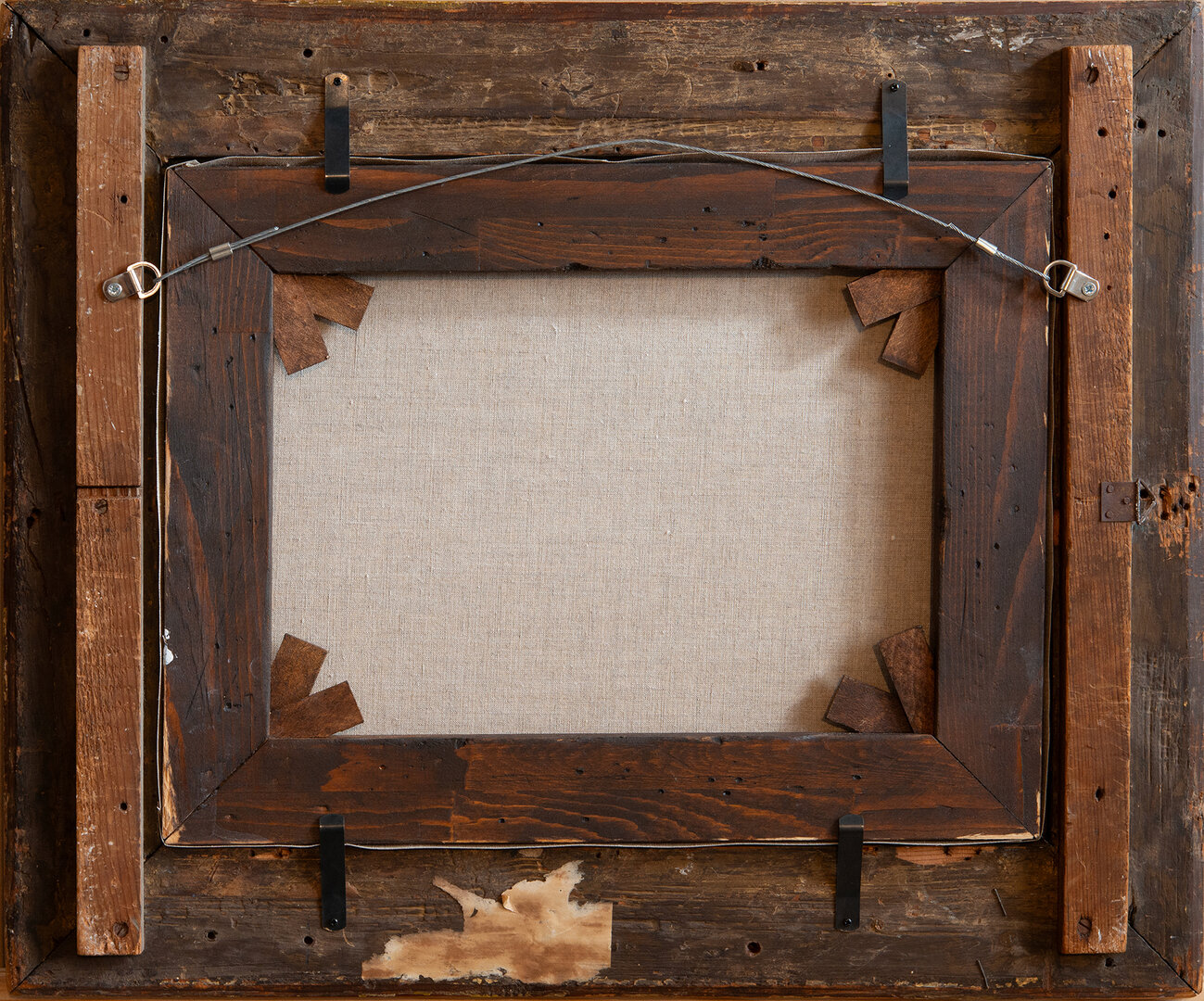
6. Are the materials correct for Van Gogh’s time?
✔ Canvas & paint:- Van Gogh used oil paint on canvas, wood panels, burlap or tea towel.
- If yours is acrylic, it’s not authentic.
✔ Pigments & colors:
- Some colors used today didn’t exist in Van Gogh’s time.
✔ X-ray & UV scans:
- Real Van Gogh paintings sometimes have hidden sketches or underpaintings.
✔ Weave pattern analysis (for experts only):
- Van Gogh bought canvas by the meter, unlike most artists who purchased pre-stretched canvases.
- Experts use X-ray imaging and digital analysis to examine the unique weave patterns of the canvas.
- Since each roll of canvas had a slightly different texture, this method helps sequence and date his paintings.
- This is not something you can check yourself—it requires museum-level research.
🛑 If the materials or weave pattern don’t match what Van Gogh used, the painting is likely a reproduction.
7. Only the Van Gogh Museum can authenticate a Van Gogh—but you can’t contact them directly
Even if your painting passes all these tests, only one institution can officially verify it:✔ The Van Gogh Museum in Amsterdam
- You cannot contact them directly.
- They work only with accredited galleries and auction houses—but there is no public list of these institutions.
🚨 Van Gogh Studio is not an accredited gallery, but this guide gives you the first steps to determine if your painting is worth presenting to an expert.
Final thoughts: What to do next?
Finding a real Van Gogh is incredibly rare, but knowing how to check for authenticity can save you from scams and false hopes.If your painting:
✅ Passes these checks → Consider contacting an art expert or auction house.
❌ Fails most checks → It’s likely a reproduction, but still may have collector’s value.
Still want to enjoy Van Gogh’s art at home? A high-quality oil painting replica lets you experience his masterpieces without the million-dollar price tag.
👉 Check out our hand-painted Van Gogh reproductions here!
 Despite using heavy impasto, Van Gogh often left small areas of blank canvas exposed
 Are the materials of your painting correct for Van Goghs time?
 Did Van Gogh write about your painting?
 Do the colors of your painting match the subject?
 Van Gogh painted most self-portraits in Paris 1886-1888
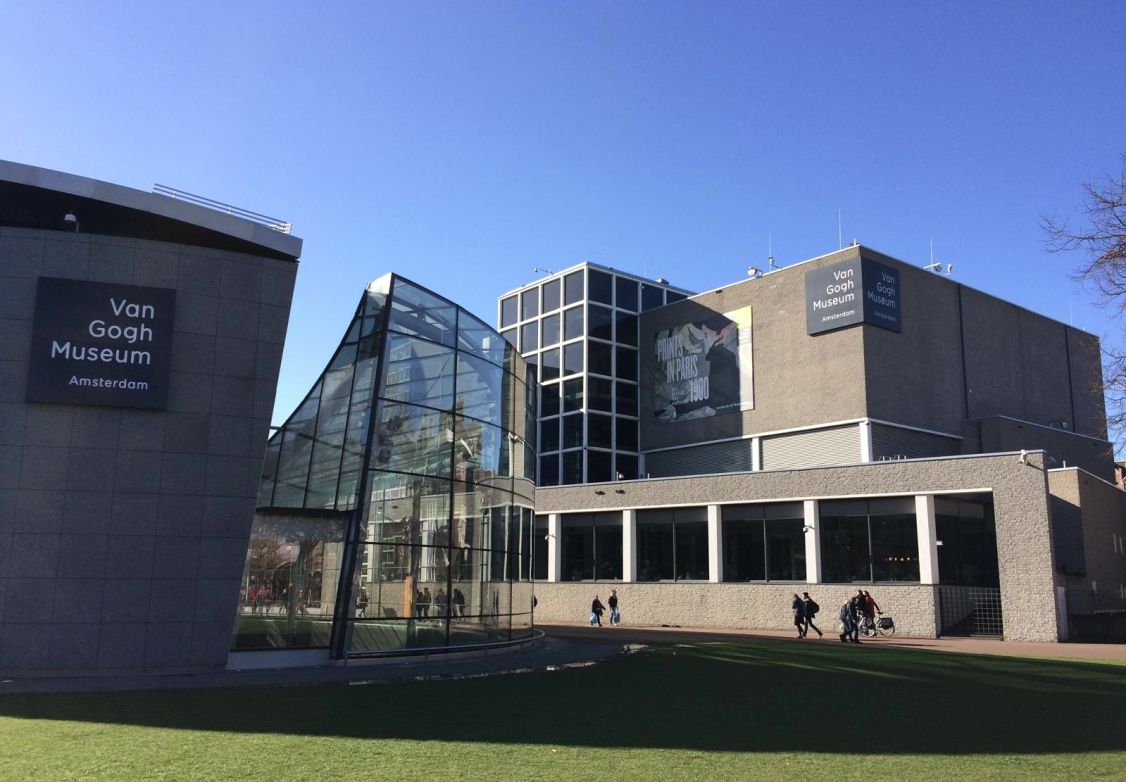 Compare your painting with those in the Van Gogh Museum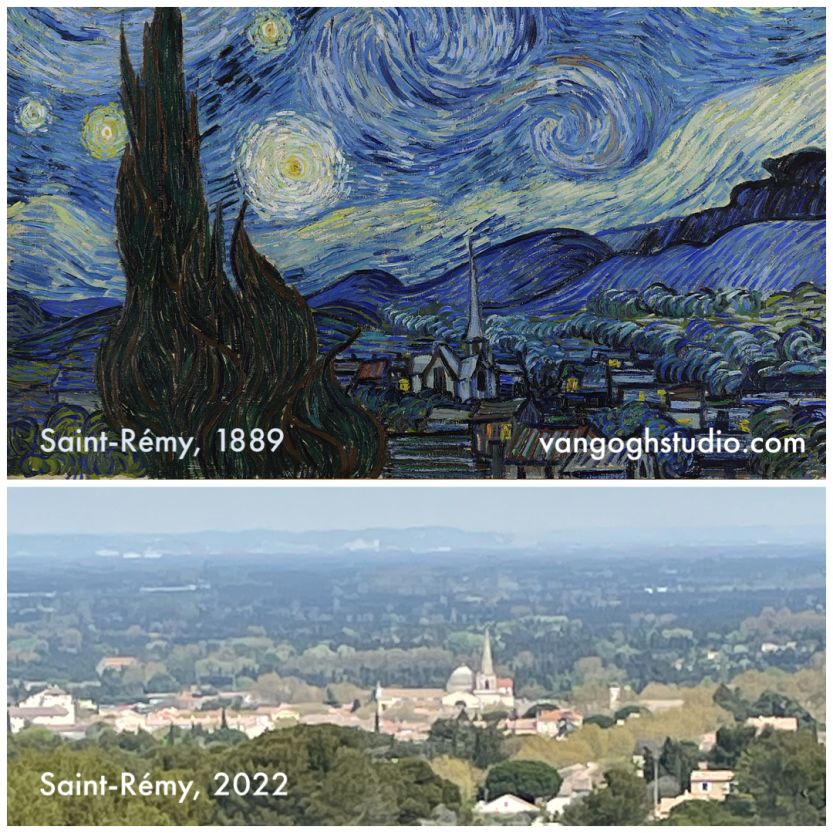
Find out where Starry Night was painted.
Your Daily Dose of Van Gogh
Discover what Vincent van Gogh wrote on this day.Find out in your FREE Van Gogh e-book.
Hundreds of questions answered by Van Gogh himself!
Comments (2)
Nicolai zegger
- 29-11-2025
Geschilderd op houten panelen.?ik weet heel zeker van niet! Zie-studie van Kees verkooijen op zoek naar de voetstappen van vg in zijn Nuenense periode. ...cederhout triplex dus...sigarenkistjes hout van Kers.....gebedeld voor weinig.
P.s. En niemand van de zgn Experts doet zijn werk! Het RKD -het van Gogh museum amsterdam -Sothebey lnd-christies a-dam- Ze wijzen naar elkaar.Ja lekker makkelijk ,doe de was de deur uit,druk op de knop en verder is er niemand verantwoordelijk voor niets.