- Van Gogh /
-
A Van Gogh for your kitchen
Which Van Gogh paintings belong in a kitchen?
A kitchen is more than a place to cook. It is a room of warmth, appetite, daily ritual and quiet sociability. That makes some Van Gogh paintings feel especially at home there. Not simply because they depict food or drink, but because they touch the wider world around the table: labour, nourishment, welcome, wine, sunlight and the pleasures of ordinary life.For those looking for a suitable Van Gogh replica for a kitchen, the paintings below offer a few especially fitting choices.
A meal shaped by labour
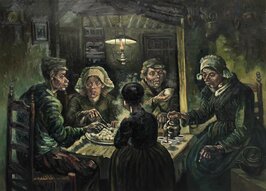
The Potato Eaters may be the most obvious kitchen painting, but also one of the deepest. It is not elegant in the usual sense. Instead, it shows food as something earned, shared and deeply human. Van Gogh wanted us to feel that these people had “tilled the earth themselves with these hands they are putting in the dish,” and that they had “thus honestly earned their food.” That gives the painting a strong place in a kitchen, where nourishment is not only about taste, but also about effort, care and the dignity of everyday life.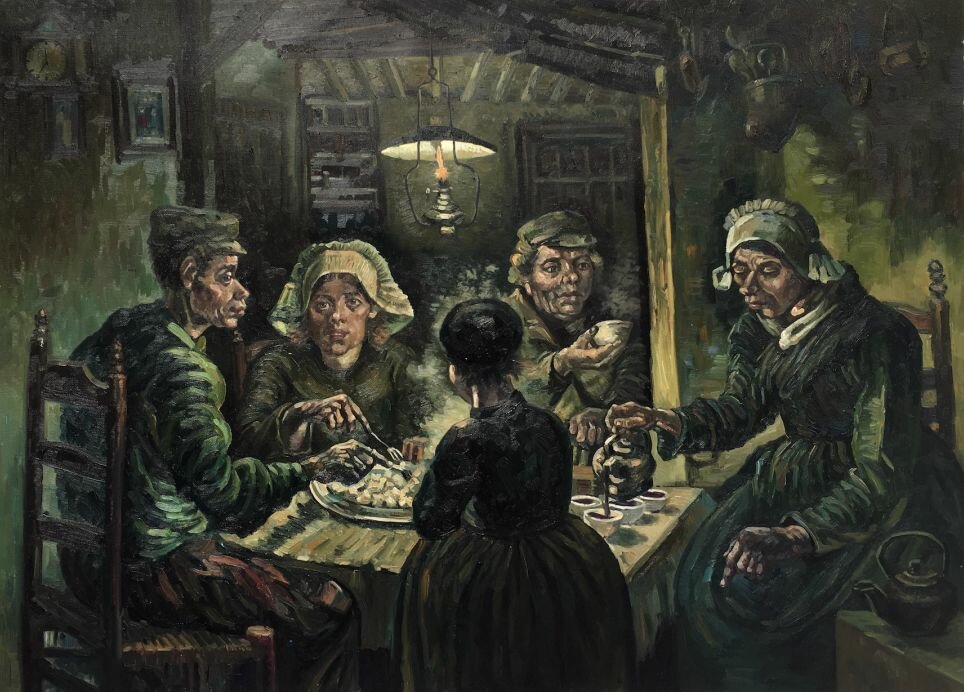
Warmth in a lived room
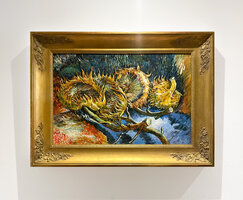
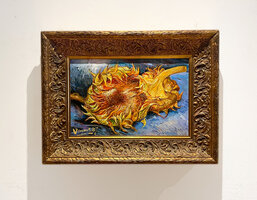
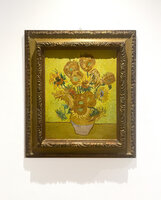
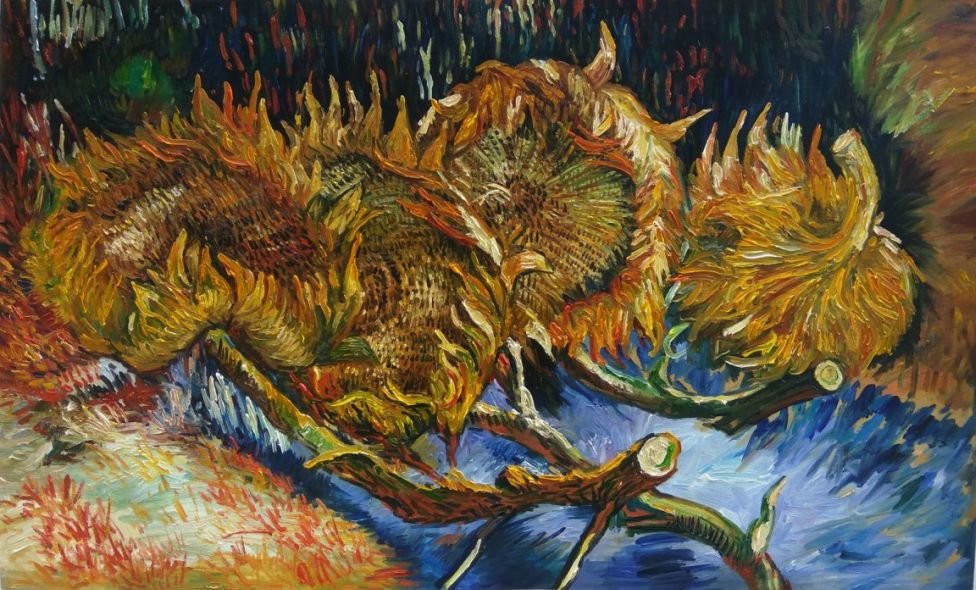
Sunflowers bring a very different kind of kitchen feeling. They are bright, generous and full of warmth. Their yellows feel almost nourishing in themselves, as if colour could become food.“I’m painting with the gusto of a Marseillais eating bouillabaisse, which won’t surprise you when it’s a question of painting large Sunflowers.” - Vincent van Gogh, Arles 1888
That line makes Sunflowers especially beautiful in a kitchen. They do not only bring brightness, but appetite, pleasure and the feeling of life being enjoyed.
Eating and drinking together
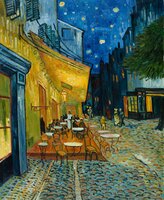
Café Terrace at Night belongs naturally in a kitchen because it evokes sociability. The glowing terrace, the evening light and the sense of people gathering outdoors all connect to the pleasures of food and drink shared with others. A kitchen is often the most social room in the house, and this painting carries something of that same welcome.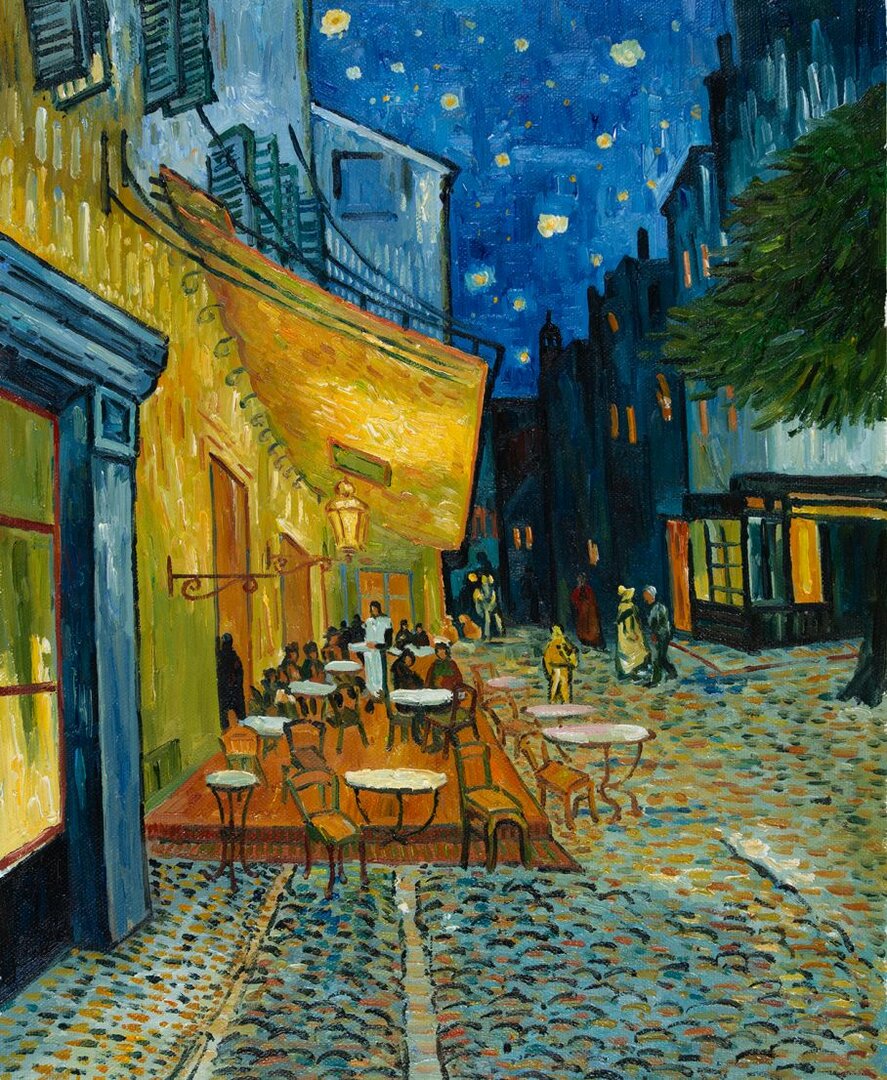
A room with appetite and class
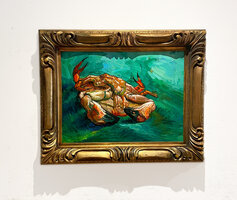
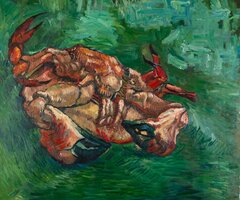
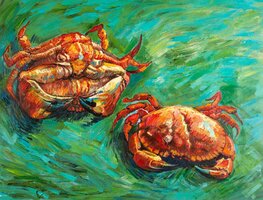
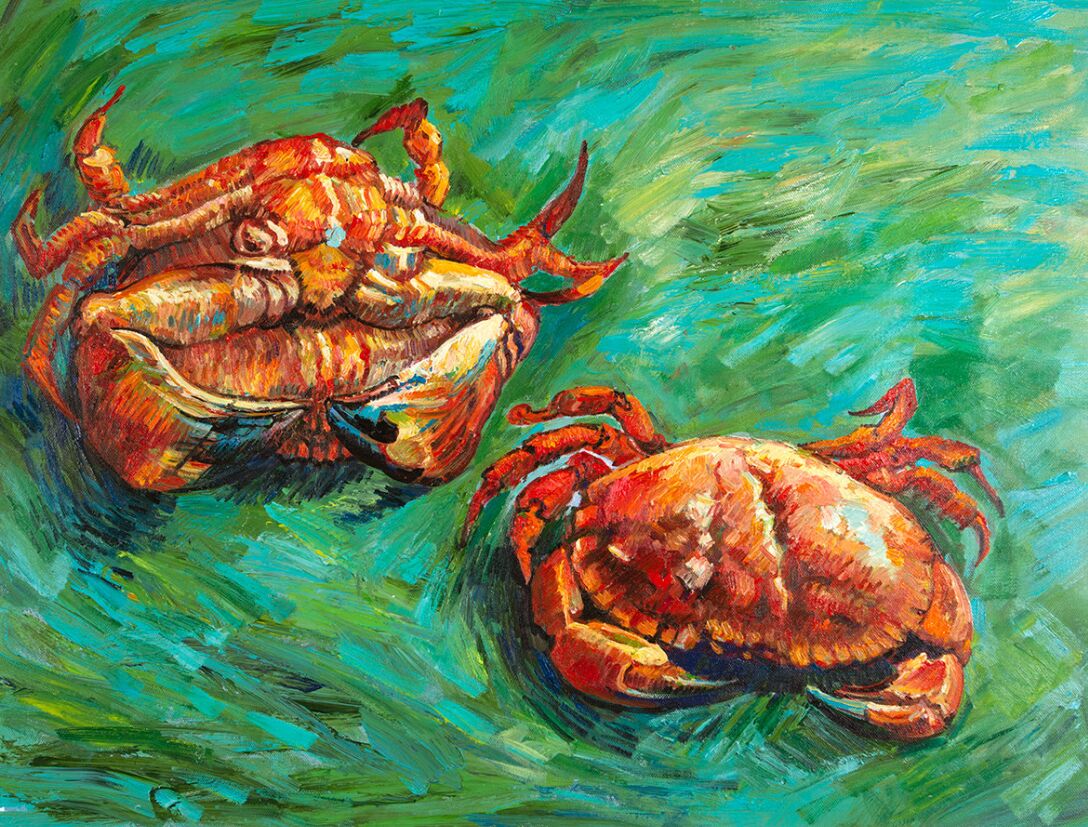
Two Crabs brings a different mood. Less rustic than The Potato Eaters and less open than Café Terrace at Night, it gives the kitchen a more refined culinary association.The deep red tones, the dark background and the concentrated composition create warmth, but also elegance. It suits a kitchen not only as a reminder of food, but as a quiet sign of taste.
Wine, colour and richness
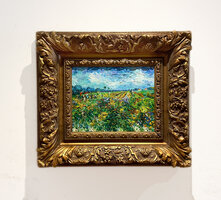
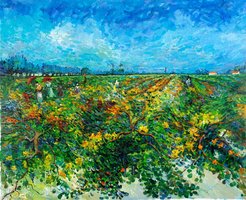
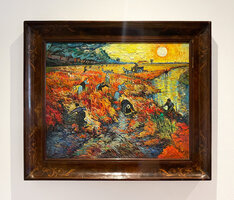
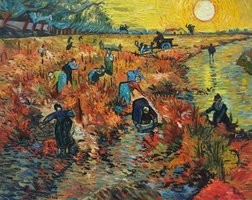
The Red Vineyard is another strong choice for a kitchen, especially for those who want warmth with a richer, more glowing palette. The painting carries associations of harvest, wine and abundance, but also of human activity at the end of the day. In a kitchen, it can suggest richness in the broadest sense: not luxury alone, but fullness of life.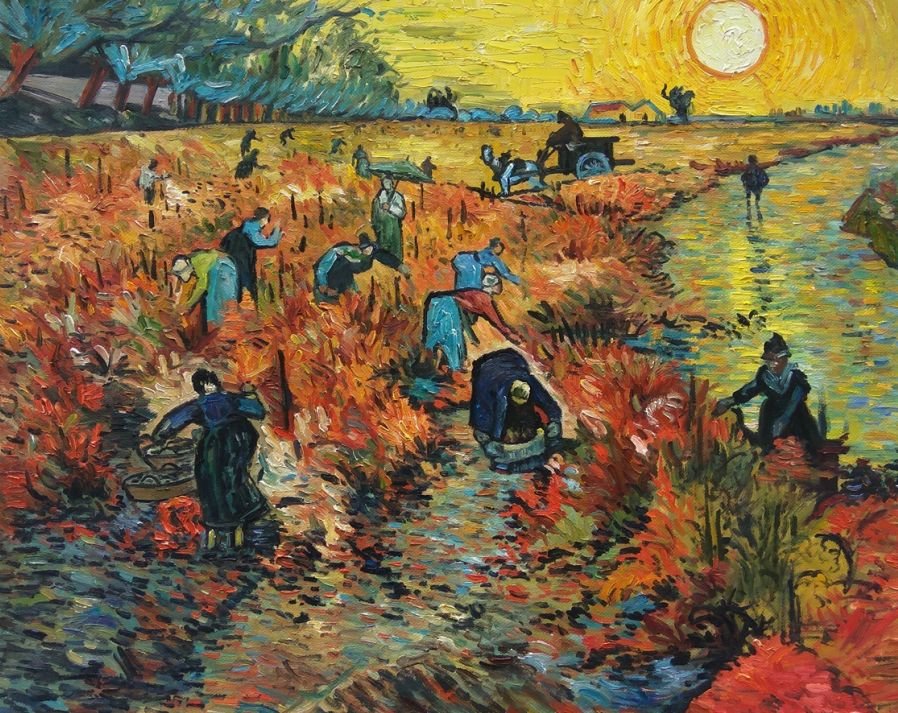
Food from the land
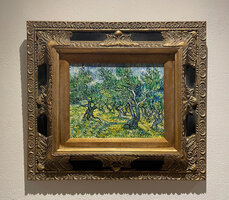
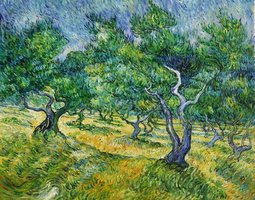
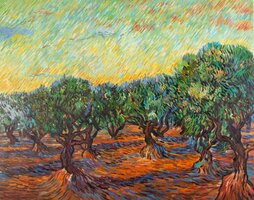
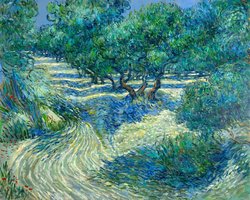
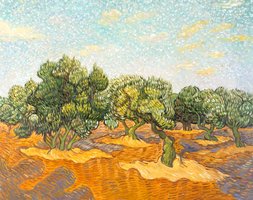
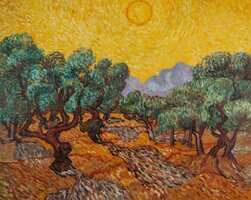
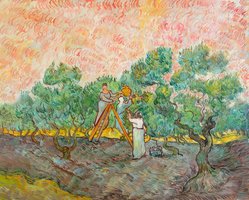
Women Picking Olives adds yet another dimension. It reminds us that a kitchen begins long before the table, in groves, fields and the patient work of gathering. That makes it especially suitable for a kitchen that leans toward Mediterranean warmth or a more natural, grounded atmosphere. It brings quiet labour into the room in a graceful way.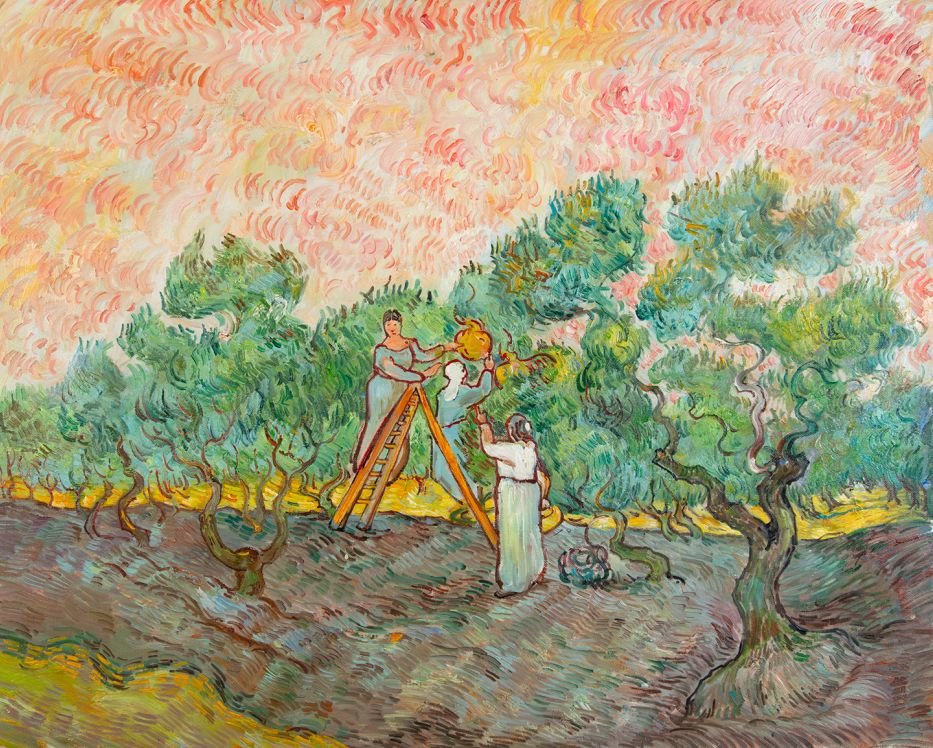
Food from the sea
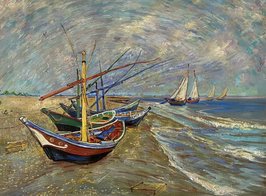
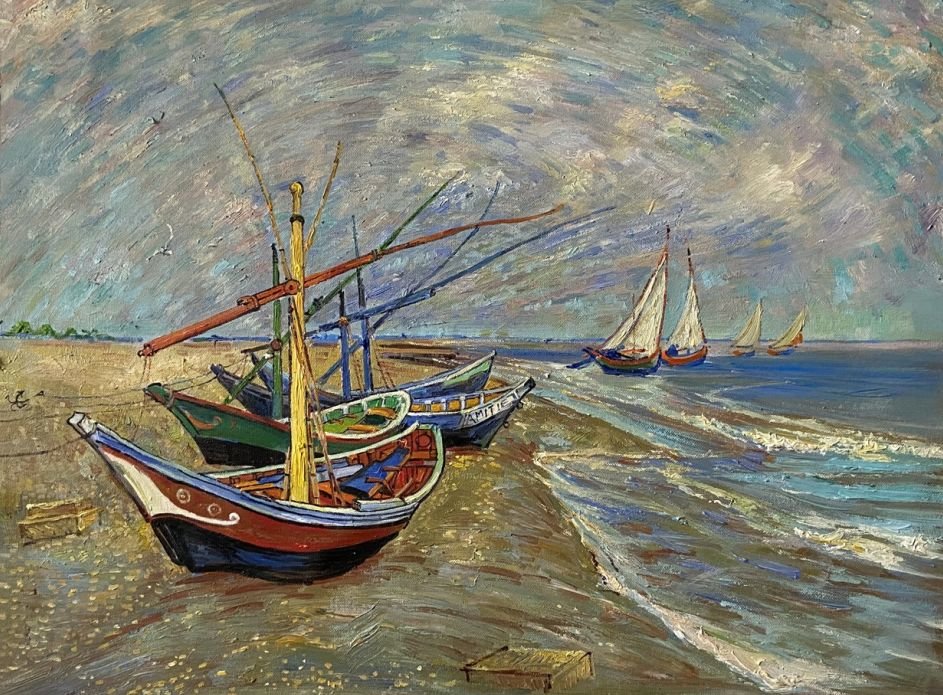
Fishing Boats on the Beach at Saintes-Maries brings a fresher and more open kitchen feeling. Where Women Picking Olives connects the kitchen to the land, this painting connects it to the sea. That makes it especially fitting in a kitchen. It evokes not only boats and sunlight, but also the simple pleasure of food coming fresh from the water.“You eat better fried fish here than beside the Seine — only there isn’t fish to eat every day, as the fishermen go off to sell in Marseille. But when there is some it’s darned good.” - Vincent van Gogh, Saintes-Maries-de-la-Mer, June 1888
Food, painting and daily life
Van Gogh did not treat food as something separate from life or work. He understood that nourishment mattered not only to the body, but also to the mind.“I’m beginning to believe more and more that food has something to do with our power to think and to make paintings; as for me, it doesn’t contribute to the success of my work if my stomach’s bothering me.” - Vincent van Gogh, Arles 1888
He also wrote with relief about the effect of eating well:
“For myself, I feel infinitely better, my blood is circulating well, and my stomach’s digesting. I’ve found very, very good food now, which had an immediate effect on me.” - Vincent van Gogh, Arles 1888
These are beautiful thoughts for a kitchen. They remind us that food is not incidental. It is part of strength, clarity, recovery and daily well-being.
A final thought
Van Gogh’s paintings can bring warmth to a kitchen not only through colour, but through their connection to food, labour and daily ritual. Those who enjoy that world may also like our page about the Van Gogh Menu at Bistrot Neuf in Amsterdam, where paintings, food and atmosphere come together in a different way.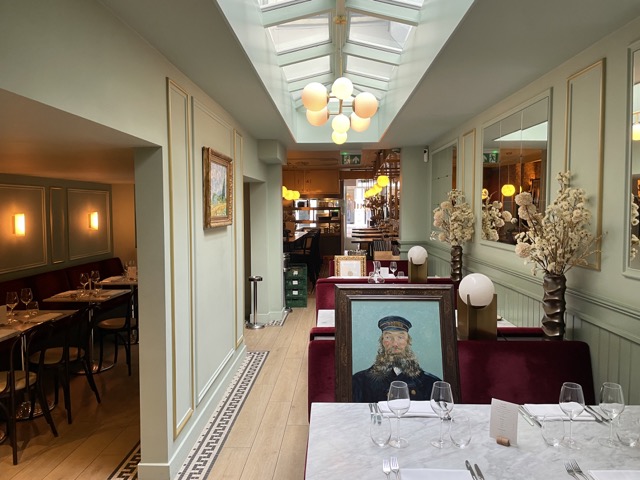
Loading...